We rarely question the environments we move through every day.
We adapt to them. Bright offices. White lights. Screens that stay on long after the sun has set. Over time, this becomes normal, even when our bodies quietly disagree.
Rest and recovery don’t begin when we lie down. They begin much earlier, shaped by what we see, hear, and absorb throughout the day. Light, in particular, plays a powerful role in how we experience time.
Our nervous system reads light as information. Cool, bright lighting signals alertness. It tells the body to stay active, focused, available. When this kind of stimulation extends into the evening, the body doesn’t always get the message that it’s safe to slow down. The result is a subtle sense of restlessness — even in moments meant for rest.
Many modern environments are designed for visibility and efficiency, not for rhythm. Days stretch longer than they should. Nights feel shorter. The natural transition from activity to rest becomes blurred, and with it, our sense of ease.
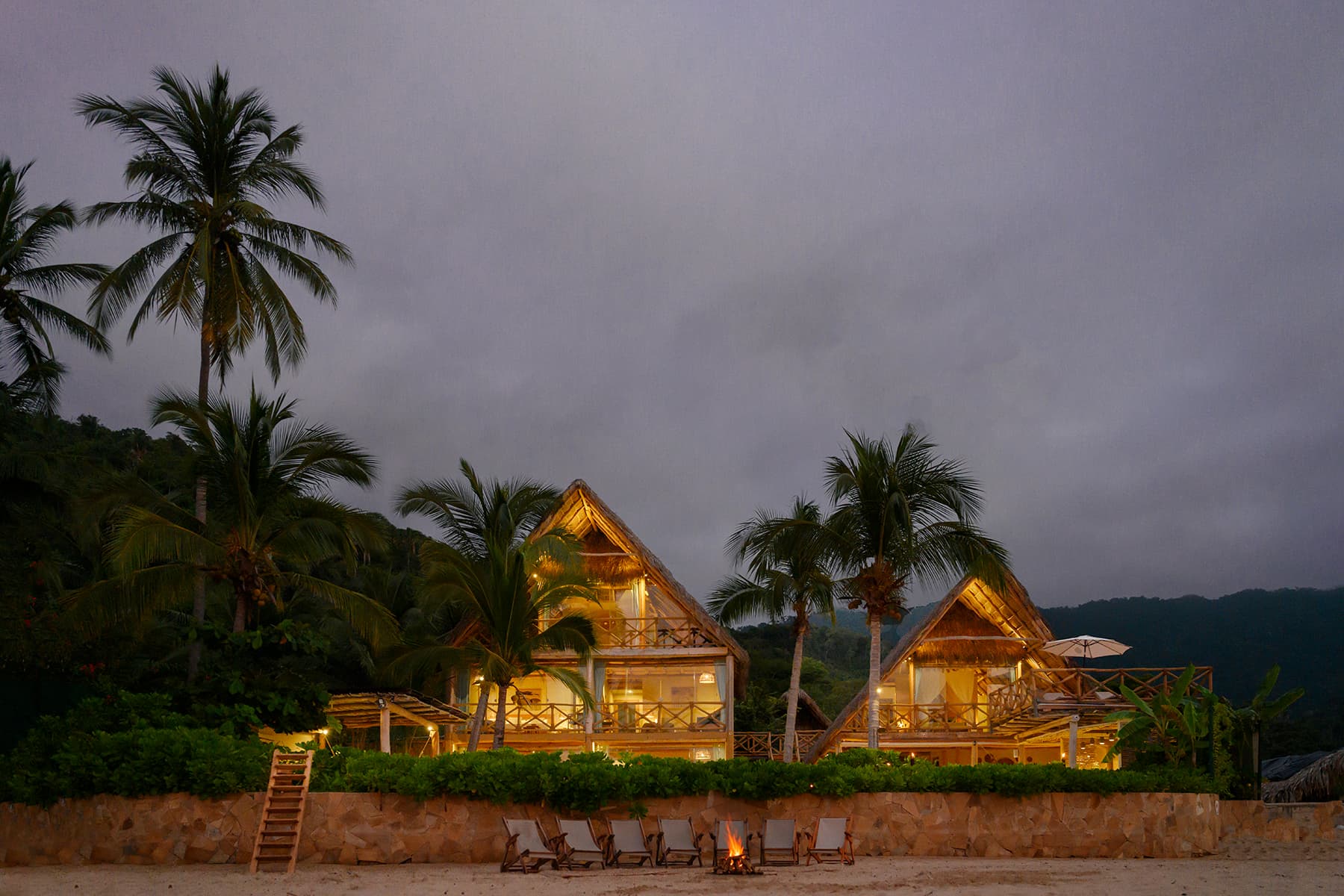
At Mixto, the relationship with light is intentional. As the day fades, so does the brightness. Evenings are held in warmer, softer tones — closer to firelight than daylight. This gentle shift prepares the body without instruction. The mind doesn’t need to be told to rest; it simply follows the signal.
This awareness doesn’t need to stay behind.
Even small shifts —like using warmer, softer lighting in bedrooms or evening spaces at home— can gently support the body’s natural transition into rest. It’s less about changing habits, and more about creating cues that invite the nervous system to slow down.
Surrounding us is a small coastal village, with no big roads or over-lit businesses. There is no competition with the stars, no constant glow pulling attention outward. Darkness is not something to fight here, it’s something to return to.
This kind of environment supports rest not through effort, but through alignment. When external cues match the body’s natural rhythms, recovery happens more easily. Sleep deepens. Even waking hours feel calmer, less compressed.
Wellness is often discussed in terms of practices and habits. But environment is a practice too: one that works quietly, continuously, in the background. When space supports the body, less effort is required to feel well.
At Mixto, rest is shaped by what’s around you: softer light, slower evenings, and a rhythm that mirrors nature instead of overriding it. It’s not about escaping the world, but about remembering how rest is meant to feel.