
Hosting a retreat is often imagined as something beautiful, and it is.
But behind that experience, many facilitators carry a quiet question: how much will I need to hold?
Between coordinating schedules, supporting participants, managing logistics, and staying present as a guide, the role can quickly expand. What begins as a desire to create meaningful space can start to feel like something that needs constant attention.
How do the teachers manage to focus on wellness without missing all the details? They move with ease. The host isn’t rushing. The group feels supported without needing to ask. There is space: not only for participants, but for the facilitator as well.
That sense of effortlessness doesn’t happen by chance.
It’s shaped by what surrounds the experience.
The Role of the Environment
A retreat doesn’t exist in isolation. The setting holds a significant part of the experience.
When the environment is intuitive, the spaces are well-defined, transitions feel natural, and the atmosphere supports calm: facilitators don’t have to overcompensate. The space itself begins to carry part of the work.
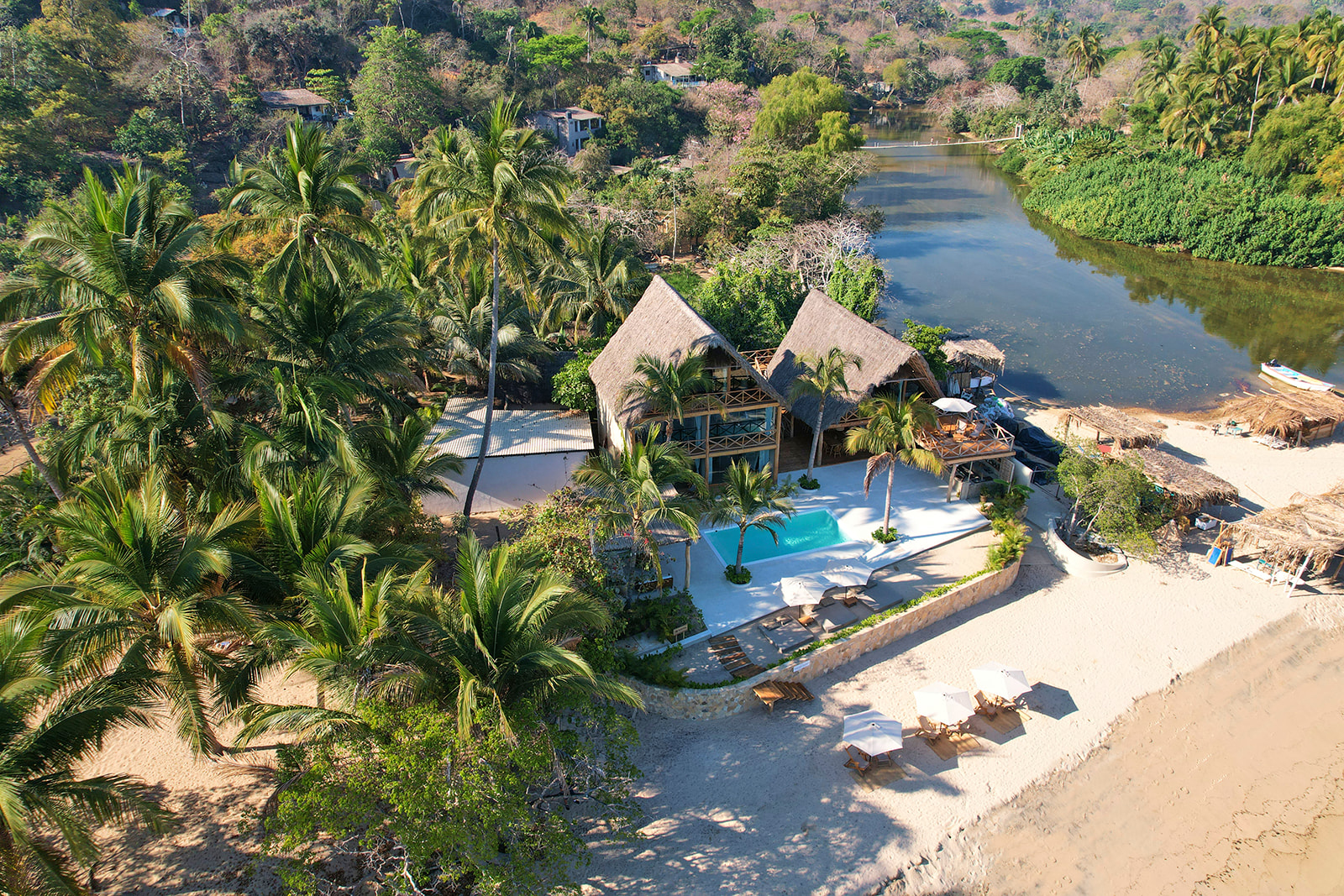
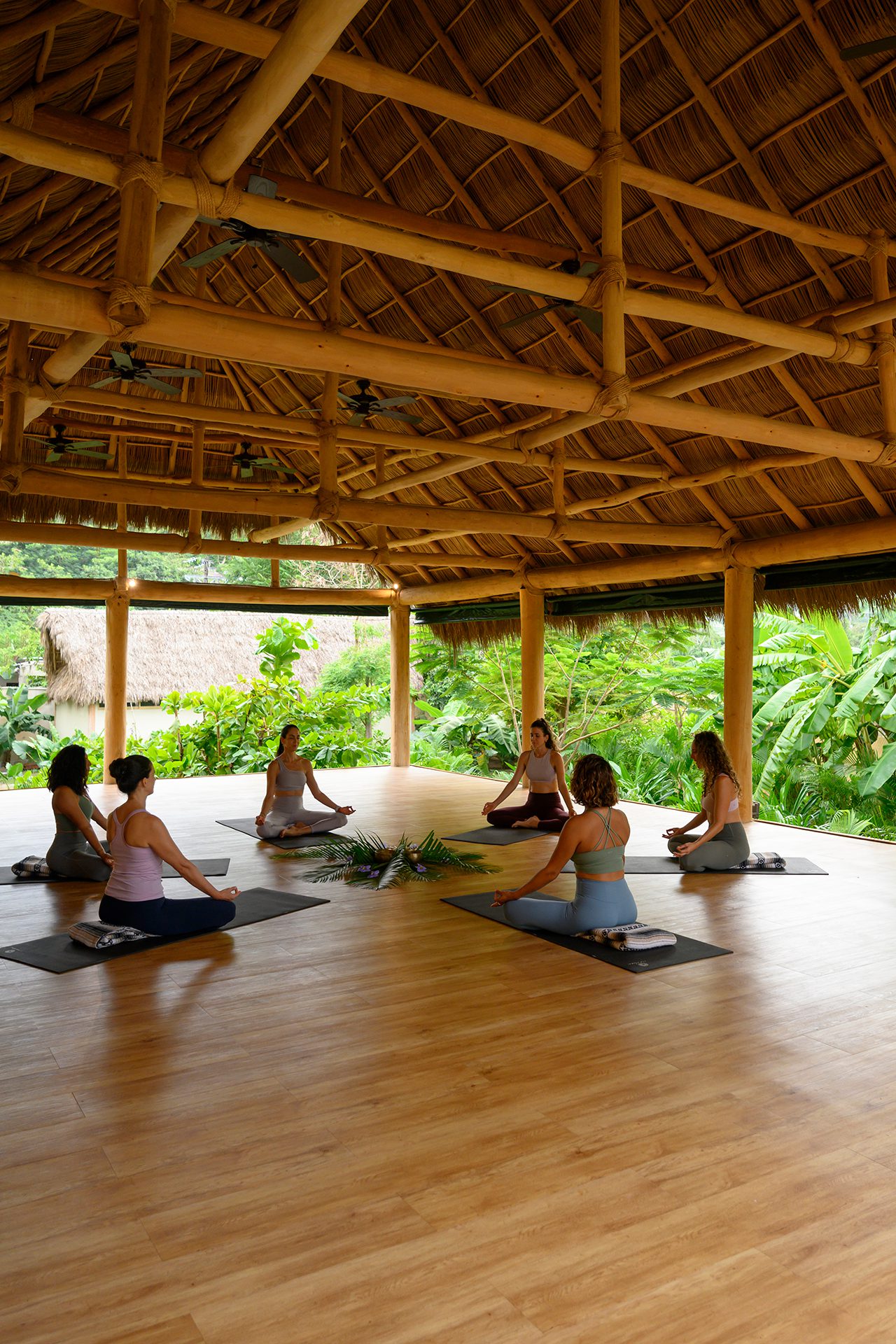
Clear pathways, proximity between rooms and gathering areas, and a natural rhythm to the day all reduce the need for constant direction. At Mixto, the yoga shala sits just behind the rooms, making transitions feel simple and intuitive. Participants move more easily, settle more quickly, and require less active management.
When Logistics Are Already Held
One of the biggest differences between a demanding retreat and an effortless one is how much of the operational side is already resolved.
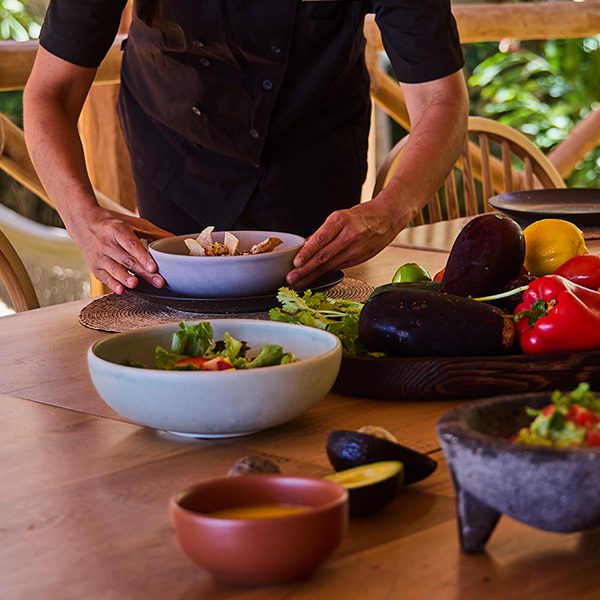
Meals arrive without coordination, and many of the essential details are already taken care of.
Schedules don’t require constant adjustment.
Support is available without needing to be requested.
This doesn’t mean the facilitator steps away from the experience: it means they are freed to focus on what matters most: guiding, connecting, and holding space.
Effortlessness, in this sense, is not about doing less.
It’s about not having to do everything.
The Energy of the Group
Group dynamics are deeply influenced by structure.
When participants feel taken care of, when their basic needs are met seamlessly, they settle faster. Questions decrease. Attention shifts inward. The group becomes more present, more connected, and easier to guide.
This creates a subtle shift for the host. Instead of managing the group, they begin to move with it.
Why Ease Matters for the Host
Facilitators often hold the emotional tone of a retreat.
If they feel supported, grounded, and present, the group reflects that.
When they are overwhelmed or distracted by logistics, that energy is felt as well — even if nothing is explicitly said.
An effortless retreat creates space not only for participants to rest, but for the host to remain in their role fully. To lead without fragmentation. To be available without being depleted.
How Mixto Supports This Experience
At Mixto, retreats are designed with this balance in mind, offering a setting that naturally supports both facilitators and guests.
The scale is intentionally small, allowing for connection without complexity. Spaces are close, intuitive, and integrated into the natural landscape. The pace is unhurried, shaped more by rhythm than by schedule.
Support is present, but never intrusive.
Details are considered in advance, so facilitators don’t have to manage them in real time.
This allows hosts to arrive into their role differently: not as coordinators, but as guides.
A Different Kind of Holding
When the environment, the team, and the structure work together, facilitators don’t have to carry the full weight of the experience. They can focus on what they came to offer.
And in that shift, the retreat becomes not only something they lead: but something they are also held within.
FAQs for Retreat Hosts
How can I make my retreat feel less overwhelming to manage?
Choosing a venue that already supports logistics: meals, timing, flow, and guest needs; reduces the number of decisions you have to make during the retreat. Preparation matters, but so does the environment you choose.
What should I look for in a retreat venue as a facilitator?
Look for spaces that feel intuitive to navigate, offer built-in support, and allow you to focus on your role as a guide. Smaller, well-designed environments often create a smoother experience for both host and guests.
Do I need a strict schedule to keep the group organized?
Not necessarily. A clear structure helps, but overly rigid schedules can create tension. When the environment supports natural flow, you can allow more flexibility without losing cohesion.
How important is group size when hosting a retreat?
Group size directly impacts how much you need to manage. Smaller groups tend to require less coordination and allow for deeper connection, making the experience feel more contained and easeful.
Can I still be present with my participants if I’m managing logistics?
It becomes more challenging. The more you are responsible for operational details, the less capacity you have to hold space. This is why having a supportive team or venue is essential.
What makes a retreat feel truly “effortless”?
It’s a combination of environment, support, and rhythm. When these elements align, both the facilitator and participants can settle into the experience without constant effort.